
When one Tupelo isn't enough.
Peter Georgi reflects on life with two Tupelo's and why.
The Landrace Tupelo is now firmly established as a versatile, robust, all-round bike. A titanium frame whose design was born from the collective data of 25 years fitting humans to bikes. There is a road version, a gravel version, and now there is a version 2 of the Tupelo.
Phil and Jules call it the V2. I think they are missing a trick, as for me it will always be the T2.
I remember clearly the huge posters for Terminator 2: Arnie, leather jacket, sunglasses. A general sense of indestructibility. And somehow my little titanium steed gives me a similar feeling every time I ride it.
T2, Titanium 2, Tupelo 2. It just works.

Anyway, back to the bikes. I have been riding the Tupelo for nearly two years now. No more carbon, no chasing trends and I somehow feel liberated. On my T1 I have ridden two winters, the cobbles of Belgium and Roubaix, trips to Girona, and the entire route of the 2025 Tour de France as a Ride Captain for Cure Leukaemia’s Tour21 charity adventure. It has been rock solid though all of it.
But… I am an old racer, introduced to the bike in the golden days of 80s cycling and mentored by one of the UK’s true greats, Colin Lewis. We hadn’t yet heard the concept of N+1, but we did naturally end up with more than one bike. Usually, two. A training bike and a racing bike.
The distinction was obvious. We used the training bike through winter and on everything but the best summer days. It was heavier, had lesser equipment, training wheels and mudguards.
The racing bike was different; it was our pride and joy. It lived in our bedrooms and was continually polished. We gave it the best equipment we could afford at the time and it was saved for racing and when there was zero chance of it getting dirty on a ride.
I can still remember the feeling of getting my first blue-boxed, Campagnolo Super Record rear mech. And then the, “I’ve finally made it” joy of picking up my first set of Mavic SSC Grey wheels from Colin’s shop.
Bike equipment mattered, not because it might have made us go faster, but because of how it made us feel.
So, as much I love my T1 and everything titanium has to offer I was missing something… my second bike.
Enter the T2, the Landrace Tupelo Version 2 to give it its full and rather less exciting name.
Could it feel like a race bike?
Before we answer that, let’s quickly look at what has actually changed, because on paper, it isn’t much. On the road it is.
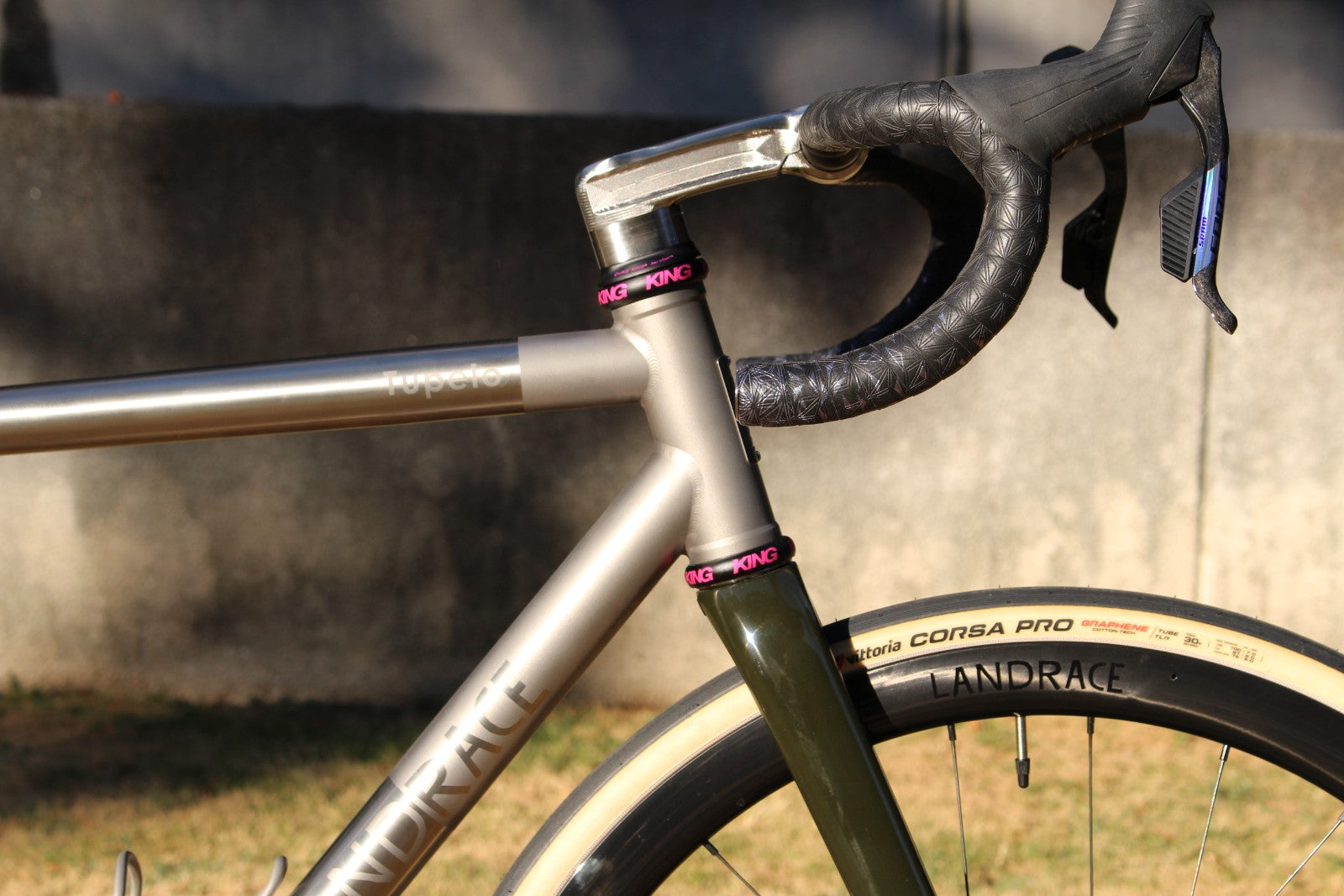
First of all, the T2 has internal cable routing. This one change makes the whole bike seem more exciting. Admittedly, it’s a little more time-consuming to build up. One thing I have loved about my Tupelos is the process of building them; it feels hugely nostalgic. Much like in my first racing career, I’d have the frame, get the groupset, beg, borrow or steal the components and then spend many hours putting it all together.
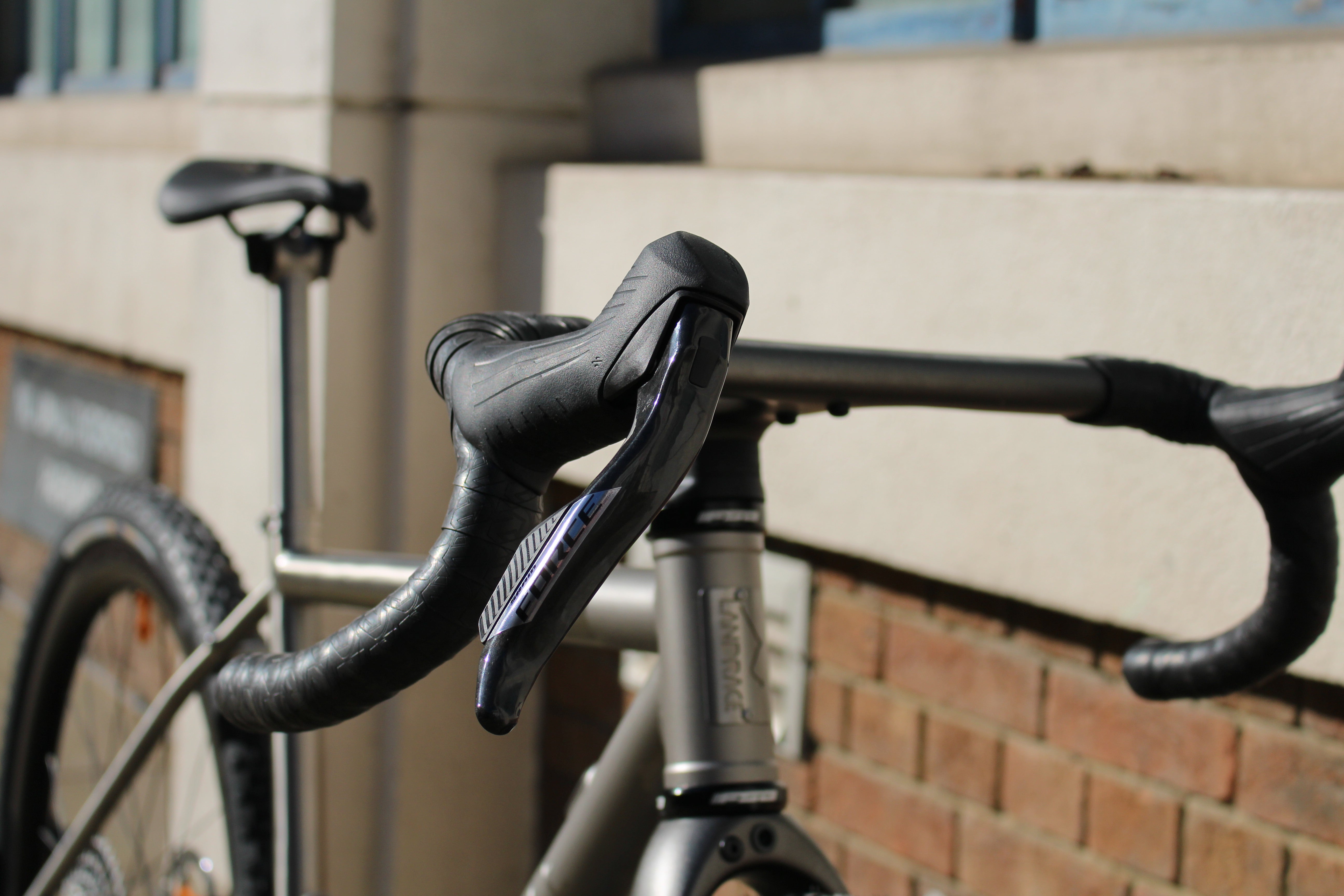
With the T2, the bars and stem area just took a little more concentration, but the effort is so worth it. What you have is a clean and fast-looking front with the wonderfully solid Chris King headset and the perfectly matched Enve aero stem.
The top tube comes up a bit longer and means I have a 1cm shorter stem than on the T1. This, I feel, gives the bike a better balance. I ride a medium frame, a 54cm, and as much as I like slightly smaller frames, having a 13cm stem was pushing the limits. The 12cm on my T2 just feels better.
Being that old racer, my position is a fraction more aggressive than most people riding Tupelos. Phil - Phil Cavell, founder of CycleFit - always says that these frames are not really built for people like me, as they are trying to create a more neutral, upright position. I think though, this versatility is another secret of the Tupelo. I have the position I want on a frame that someone with incredibly tight hamstrings and a very unsupple back could also ride! In fact, the T2 is even more accommodating. On my T1 the stem was as low as it could go. With the T2, the headtube/headset configuration is a fraction shorter, and I could have the bars even lower if needed.
The rest of the bike is pretty much the same. The chainstays on Tupelos are as short as they can go and still give the wheel clearance needed. This results in what for me is one of the best ‘riding’ attributes of the bike, it’s liveliness. On climbs the bike feels light and nimble, not stuck to the road and sluggish. The bottom bracket is lower than most modern bikes (like the T1), which makes it incredibly stable on rough ground and super easy to descend on.
The wheels I have are the Landrace Road wheels, on DT hubs. The same wheels CycleFit supply to their sponsored women’s race team, London Academy. In fact, my wheels came from team stock. These are just a great set of wheels, light, strong and match the bike perfectly. The 45mm rims roll fast but don’t get caught in crosswinds, but the best thing for me is that they are hooked.
In a cycling world increasingly embracing hookless rims, CycleFit have made the choice to stick to a traditional hooked design, where the tyre is mechanically held in place by a lip inside the rim. It’s an ideological stance that sits with me perfectly and probably says a lot about our age. Safety and confidence over some notional, unspecified marginal gain? Any time.
I finished building my T2 halfway through the spring classics, just in time for our annual trip to cycling’s holy land, Belgium. We go to watch our daughter – Pfeiffer Georgi – ride Ronde van Vlaanderen and Paris Roubaix. I also take the opportunity to hit the cobbles too.
My first ‘proper’ ride on the T2 was a ride from Kortrijk to the Kemmelberg via Ypres - as Belgium as it gets. I had made sure everything worked the week before, all bolts tight, brakes bedded in, no squealing and gears beautifully indexed. It was ready.
The first thing I noticed was the corners. Into them the bike just went where I wanted, but out of them, much faster than the T1. I think the lighter wheels, more race-like forks and tighter front end make the bike feel snappier. Don’t get me wrong, this is not an over twitchy, race-bred World Tour bike but something you can enjoy riding fast at times while still being comfortable and safe – just the feeling I wanted.
Getting to the Kemmel there are a few cobbled sectors, nothing big but enough to get the first feel of how the bike would handle them. Again, perfect. Stable while absorbing vibration. On the Kemmel itself, it just did its job. Allowed me to change gear, shift my weight around and keep the back wheel moving even on wet parts. I rode up the long side (Belvedere) twice and the short, 20% east side to the First World War monument once. A great day one.
Next test, Ronde van Vlaanderen Sportive. 163km with thousands of others over endless iconic climbs and sectors: Kwaremont, Paterberg, Koppenberg, Paddestraat, Molenberg. Each hard, each different. This was a good day as the best compliment I can give the bike was that I didn’t think about it. I just enjoyed my day, enjoyed avoiding other riders on the climbs, descending the odd cobbled sector and even confidently coming almost to a standstill on the crowded Koppenberg, avoiding clipping out, and then still getting to the top. I felt better at the end of Flanders than on any long sportive before, something I put down to the way titanium seems to reduce the harshness of the roads you are on. I even got to come into the finish in a fast-moving group, all doing through and off. My race bike obviously still there.

After Flanders, the world’s attention turns to different cobbles, those of Roubaix. I spent a few days heading out to the later sectors and just riding. This year the weather was hot and dusty, which meant, when the legs allowed, I could ride fast and imagine I was racing again.
For the past few years, I’ve had the absolute privilege of joining Pfeiffer and her teammates on their pre-race recce. It’s a ride I look forward to. Hitting cobbles hard and trying to hang on for as many sectors as possible. It’s a humbling experience for me and, this year, a super test for the T2. I obviously wanted to show my skill, but more importantly I needed to not embarrass Pfeiffer…
To be safe, I needed to be confident. Confident the bike would go where I wanted, not fall apart on the harsh stones and deal with the constant need to navigate gaps and furrows that, on any normal ride you would totally avoid. A few aching sectors later, success on all fronts.
I eventually got dropped. Digging as deep as if trying to win a race, I lost the wheels at the end of one of the long sectors. The team car came up to me, handed up a gel and, with a smile and shrug, shot away in a cloud of dust. It doesn’t get much better than that.
To cap off a great day, I even got mentioned in an article from an embedded journalist. Thanks, T2 for a great memory made.
Article here: https://road.cc/feature/big-mac-recons-broken-radios-and-never-giving-up-inside-picnic-postnls-classics-campaign
The weekend’s Roubaix sportive upped the ante even more, nearly 30km of cobbles starting with the Arenberg Forest. I got through it, the bike got through, many of those around me didn’t.
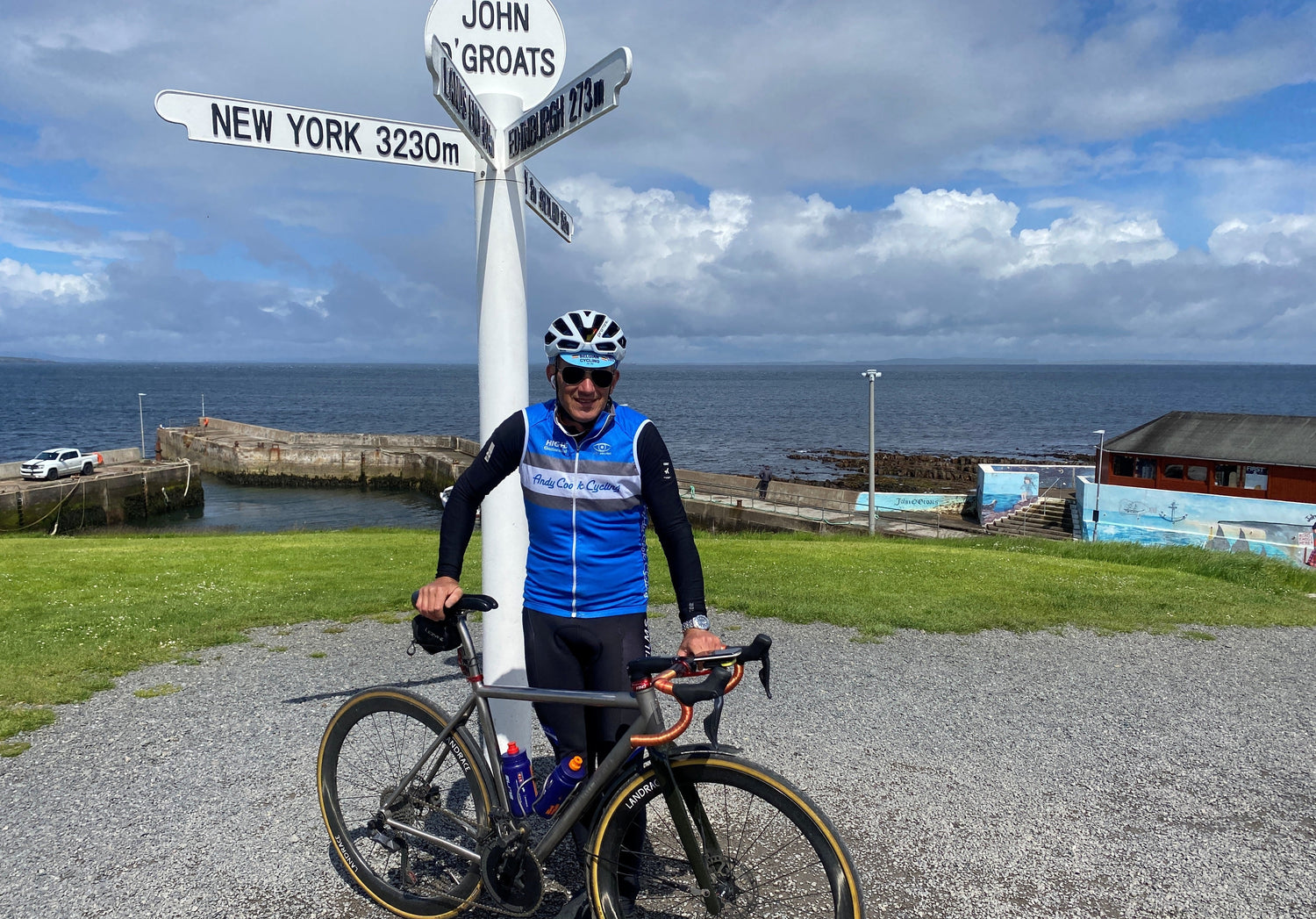
My Belgiam (and France) sortie had shown the T2 could handle the tough end of cycling: cobbles, steep climbs and being ridden harder than most 60-year-olds want to. But more was to come. Back home I got to do a first: ride Land’s End to John O’Groats as a Ride Captain. At the beginning of June our 10 days fell right between two heatwaves, and we had rain most days. I put mudguards and slightly heavier tyres on the T2 and forgot about the bike. 100 miles a day across the UK. Big roads, small lanes, bike paths by lakes, gravel tracks, we rode them all. For the T2, I think this is where its versatility showed. My race bike had its rough weather coat on, but it was still a joy to ride. It was sprightly, not sluggish. It was easy to clean and meant I started each day with a smile, no matter how many hours of rain were forecast.

Ten days after reaching the top of the UK, the mudguards came off, the lighter tyres were put back on and the T2 was packed for Italy. I was heading for one of cycling’s most beautiful days out, the Maratona dles Dolomites. 4320m of climbing in 138km. I had been the group coach for a team of 10 women from @ride_luca, helping them prepare for and then ride the Maratona. Their goal, apart from having a great ride, was to raise money for Action Medical Research, a charity that both Pfeiffer and I are ambassadors for.
What can I say? The ride was one of my best days on a bike. Luca’s team blitzed the mountains and, as well as supporting them, I got to give the T2 the last part of its apprenticeship. Long climbs and steep descents on fully closed roads. Wow, the opportunity to let the bike go and use both sides of the road. Not often us mere mortals get to do that, but the bike was a joy. On the climbs it really did feel light and there was never a moment going downhill where confidence disappeared.
So, is the T2 my race bike?
Yes, but not in the way I expected. I don’t race anymore, so it doesn’t need to be brutally stiff or under the UCI weight limit. It isn’t a World Tour race bike. But the events I ride are just that, events. They are things I look forward to, prepare for and get nervous for. Lining up at 5:30am for the Maratona was a unique experience, and one I would only want my race bike for.
I treat my T1 and T2 differently too. T1 is there waiting for wet weather and shitty lanes. But my T2? I look at it before rides; I clean it when it probably doesn’t need cleaning and I occasionally find myself in the garage admiring it. It has 100% given me back the two bike psyche.
It isn’t literally my racing bike, but it does feel like it.
It is just my T2.
Come with me if you want to ride…
Peter